

The India Middle East Europe Corridor: Progress and Politics
The India Middle East Europe Corridor represents one of the most ambitious infrastructure undertakings of the twenty-first century, threading together three of the world's most strategically consequential economic blocs through a network of rail, shipping lanes, and energy pipelines that promises to redraw global trade flows for generations. For investors and sovereign stakeholders alike, understanding the geopolitical friction points and capital deployment opportunities embedded within this corridor is no longer optional — it is a prerequisite for positioning ahead of a structural shift that rivals the original Silk Road in both scale and consequence.…
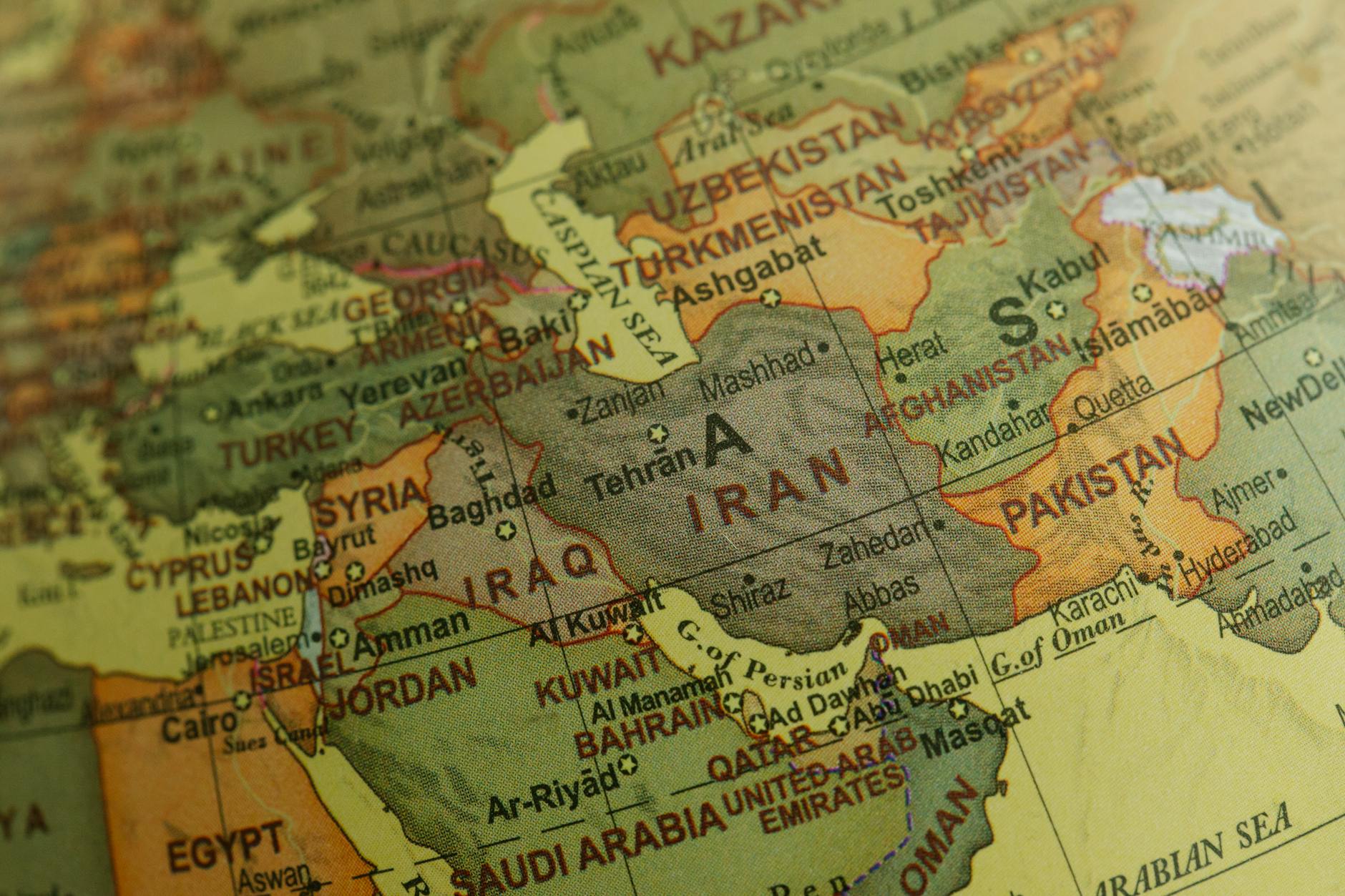
When heads of state gathered in New Delhi in September 2023 to announce the India-Middle East-Europe Economic Corridor — IMEC — the room understood this was something more than a diplomatic photo opportunity. A rail-and-shipping route linking Mumbai to Mundra, crossing the Arabian Peninsula through the UAE and Saudi Arabia, transiting Jordan and Israel, and arriving at the port of Piraeus in Greece: ambitious by any honest measure. Two and a half years on, the corridor sits at a complicated intersection of extraordinary commercial opportunity and equally extraordinary political friction. For investors, family offices, and sovereign-aligned funds watching from Riyadh, Abu Dhabi, Nairobi, or Jakarta, the question is no longer whether IMEC matters. It is how quickly its underlying logic translates into deployable infrastructure and bankable returns.
The Commercial Architecture Beneath the Headlines
Strip away the geopolitical framing and IMEC is, at its core, a logistics play. The corridor promises to cut transit time between India and Europe by approximately 40 percent compared to the Suez Canal route, with some projections suggesting freight cost reductions of up to 30 percent once the rail segments are fully operational. That is a significant shift — the kind that rewrites supply chain assumptions for a generation of procurement chiefs and trade financiers alike.
For Gulf states that have spent the better part of a decade positioning themselves as global trade intermediaries — not merely oil exporters — the corridor is a structural validation of that ambition. The UAE, which has now signed Comprehensive Economic Partnership Agreements with more than 20 countries, including a landmark CEPA with the Democratic Republic of Congo signed on February 3, 2026 in the presence of UAE President Sheikh Mohamed bin Zayed Al Nahyan, understands better than most that trade corridors create compounding advantages. Port access, warehousing, financial services, insurance — all of it clusters around the nodes of major trade routes. IMEC's Arabian Peninsula segment positions Abu Dhabi and Riyadh as precisely those nodes. The money follows the infrastructure. It always has.
Saudi Arabia's Strategic Pivot and the PIF Factor
Saudi Arabia's role in IMEC cannot be separated from its broader economic transformation. The Public Investment Fund's newly approved 2026–2030 strategy — ratified by the PIF Board of Directors chaired by Crown Prince Mohammed bin Salman and presented publicly by PIF Governor Yasir Al-Rumayyan on April 16, 2026 — marks a deliberate change in posture. The previous strategy focused on integrating Saudi Arabia into the global economy. The updated framework aims higher: making the kingdom a centre of global economic gravity in its own right. The distinction matters.
IMEC serves that objective directly. A corridor that moves Indian manufactured goods and Gulf hydrocarbons into European markets, while returning European capital goods and technology eastward, places Saudi infrastructure — its rail networks, its new logistics zones, its Red Sea port developments at NEOM and Ras Al Khair — at the centre of a multitrillion-dollar trade flow. For private investors and family offices with exposure to Saudi real estate, logistics, or financial services, the PIF's new strategic direction functions as a sovereign guarantee of continued infrastructure spending that underpins those asset valuations. When the world's largest sovereign fund tells you where it is directing capital for the next five years, the intelligent response is to read that document carefully.
The UAE's Port Diplomacy and What It Signals
Abu Dhabi's approach to IMEC has been characteristically pragmatic. While diplomatic discussions continue at the political level, the UAE has been building the physical infrastructure of connectivity with remarkable speed. The deals are already done. The steel is already moving.
AD Ports Group, which on February 3, 2026 signed Heads of Terms with the DRC's Ministry of Transport for the development of a multipurpose terminal at Matadi Port — signed by DRC Deputy Prime Minister Jean-Pierre Bemba Gombo and AD Ports Group CEO Captain Mohamed Juma Al Shamisi — exemplifies the model. Matadi is the DRC's primary maritime gateway, handling cargo that includes copper and cobalt from some of the world's richest mineral deposits. By securing operational footholds at ports handling critical mineral supply chains, AD Ports is not merely expanding its revenue base. It is constructing the connective tissue of a broader trade architecture that mirrors IMEC's logic at a regional level. Few outside the region have noticed. They should.
DP World, meanwhile, has committed $6 billion in African port investment — $3 billion already deployed, another $3 billion pledged over five years — with facilities stretching from Senegal to the Horn of Africa. These investments are not incidental to IMEC. They are practice runs for the kind of integrated, multi-node port operations the corridor will require at scale. The UAE is not waiting for the ribbon-cutting ceremony. It is building the ribbon.
Political Friction: The Israel Variable and Corridor Fragility
The most significant obstacle to IMEC's timeline is not engineering. It is not financing. It is geopolitics, and on that front the picture remains genuinely unresolved.
The corridor's original routing through Israel — connecting the Jordanian port of Aqaba to the Israeli port of Haifa before crossing to Greece — was conceived in a different political moment. The events of October 2023 and the prolonged conflict that followed have complicated, though not extinguished, the normalisation trajectory between Saudi Arabia and Israel that IMEC implicitly depended upon. Saudi officials have been careful not to formally withdraw from the corridor framework, and the commercial logic of the Arabian Peninsula rail segment holds regardless of how the Israeli routing question resolves. But for the corridor to achieve its full projected potential — and for investors in its dependent sectors to see returns at the scale the original projections suggested — a resolution of the political impasse is not optional. The numbers only work if the route works.
Alternative routing discussions are underway, including options that bypass Israeli territory through Jordan and onto Turkish networks. Each alternative adds cost, adds time, and adds layers of negotiating complexity. None of them are clean. Investors sitting on IMEC-adjacent positions should price that uncertainty in — not out.
The Investor Calculus: Where Capital Has Room to Move
Here is what sophisticated capital should actually be watching. Several distinct opportunity vectors exist along the corridor that do not require resolution of the macro-political questions to generate near-term returns.
Logistics and cold-chain infrastructure serving the Arabian Peninsula trade nodes — particularly in the UAE and Saudi Arabia — will attract capital regardless of which exact route IMEC ultimately takes. That demand is already here. Indian port infrastructure, particularly at Mundra and Jawaharlal Nehru Port, is already receiving significant private investment in anticipation of elevated throughput volumes. In Europe, Piraeus — majority-owned by China's COSCO — remains a contested asset, and the corridor's activation could trigger renewed European interest in rebalancing port ownership on the continent's southeastern edge. Watch that one closely.
Across Africa, the Gulf's infrastructure push tells the same story in a different geography. The UAE's commitment of up to $1 billion in AI infrastructure funding, announced at the G20 in Johannesburg, and G42's $1 billion data centre development in Kenya suggest that the same investment logic driving IMEC is simultaneously rewiring sub-Saharan connectivity. The corridors are multiplying.
Family offices with patient capital and existing relationships inside Gulf sovereign structures are better positioned than most to access the private placements and co-investment opportunities these projects generate before they reach public markets. The advantage is structural — but it is not permanent. IMEC is not a single project to track on a Gantt chart. It is a reorientation of global trade geography that is already reshaping where value accumulates. The investors who recognise that earliest will set the terms. Everyone else will pay them.

Written by
Sophie Aldridge
Global Economics Editor · Geopolitics
Sophie spent a decade advising governments on trade policy before deciding the story was more interesting than the memo. She covers global economics, geopolitics, and the power transitions reshaping emerging markets. Sharpest on sanctions, supply chains, and the politics behind the price of everything. Based in Washington, D.C. Reach out at sophie.aldridge@theplatinumcapital.com.


